Energiso

Condensate Pot Manufacturer In Vadodara

The successful measurement of steam, gas, and vapor flow of the processing plants greatly depends on the condition of the impulse pipe system. The process lines can easily penetrate impulse pipes. Thus, there is a development of static head imbalance and damage done to the sensitive diaphragm sensors inside the differential pressure transmitter (DPTs).

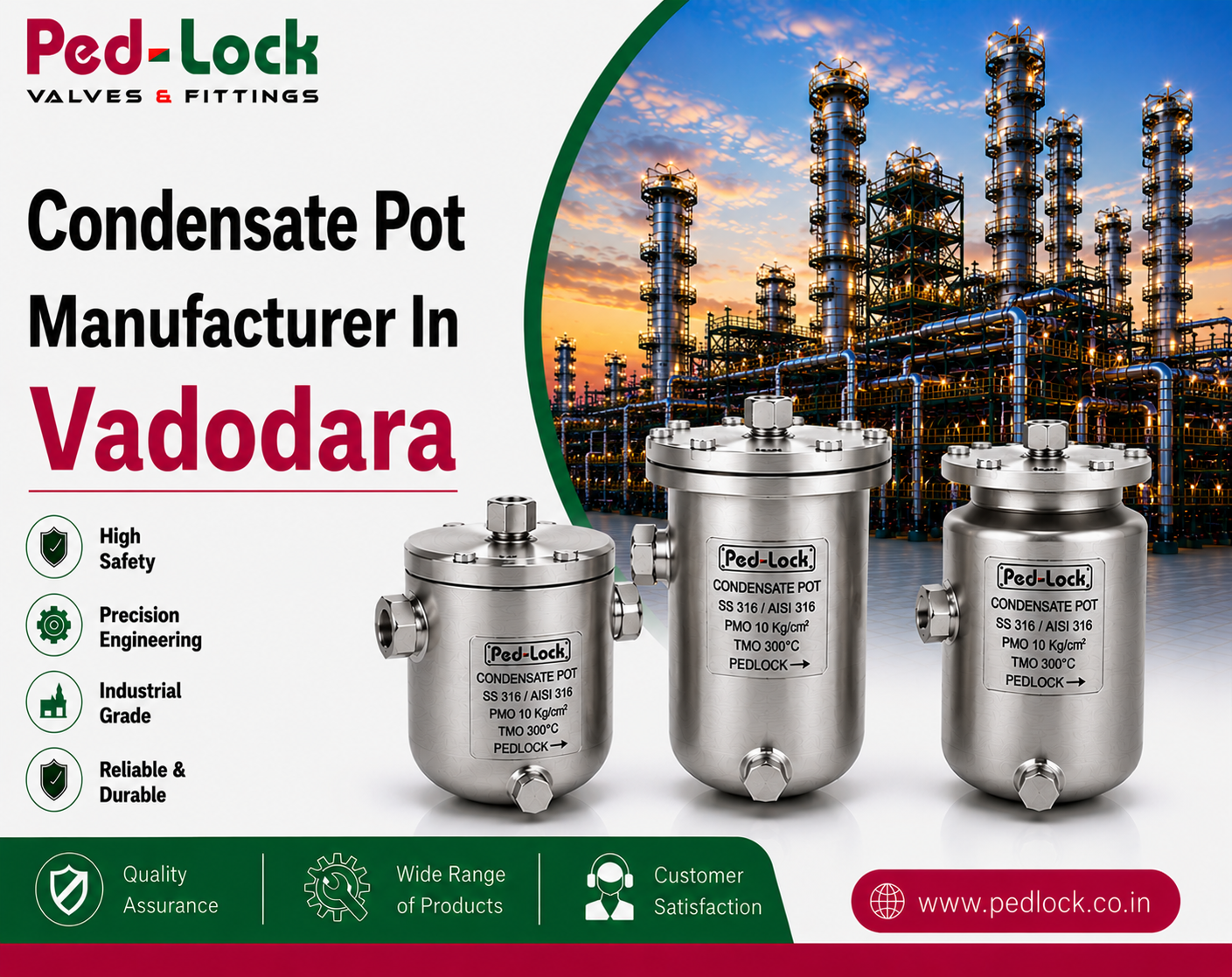
The condensate pot, also called as seal pot, acts as a transitional chamber between the main processing pipeline and the appropriate measuring instruments. The condensate pot acts as a containment chamber of sorts, ensuring the safe application of instrumentation loops. By choosing a reliable Condensate Pot Manufacturer In Vadodara, companies ensure the availability of long-lasting vessels that comply with all major regulations and ensure the effectiveness of their systems.

Condensate Pot Manufacturer In Vadodara

The Engineering Role of Condensate Pots in Process Loops

In measuring differential pressure in a flow, it is essential that the pressure of the steam in the upstream and downstream sections connected to the orifice plate or venturi be the same. If there is uneven condensation of the steam, then liquid columns of different heights are formed in the two pipes, resulting in faulty differential pressure readings.

Condensate pots help eliminate this problem by providing a liquid reservoir that is consistently kept full above the transmitter.


Primary Functions in Pipeline Systems :

  • Sensing Line Balance : Keeps a uniform volume of fluid in every leg of the impulse pipe, helping prevent errors due to changes in steam density.
  • Particle Trapping : Retains severe pipe scale, rust and other impurities in the lower section of the pot and prevents clogging of the delicate manifold holes.
  • Temperature Reduction : Transforms live steam into cold condensate liquid in the pot casing, protecting the diaphragm of the transmitter from excessive temperature changes.
  • Maintenance Accessibility : Comes with a special drain connection located at the bottom for flushing the lines from time to time without stopping the operations of the main units.
  • Technical Specifications Table

    Pedlock’s condensate pot is produced according to ASME B31.1 and ASME B31.3 requirement. Each unit is fabricated from heavy wall pipe and is subjected to pressure testing before leaving the company.

    Feature / Attribute Technical Standard
    Available Sizes (NPS) 3 Inch, 4 Inch, and 6 Inch nominal pipe sizes
    Pressure & Temperature Rated up to 6,000 PSI at temperatures up to 250ºF
    Inlet Port Options 1/2” NPT, BSP, or Socket Weld
    Outlet Port Options 1/2” NPT, BSP, or Socket Weld
    Drain Port Options 1/2” NPT, BSP, or Socket Weld
    Pot Port Options 1/2” NPT, BSP, or Socket Weld
    Material Construction Stainless Steel (SS 304/304L, SS 316/316L), Carbon Steel, & Alloys
    Inspection & Testing 100% Hydrostatic and Pneumatic Testing

    Material Selection Based on Process Media

    Selection of proper metallurgy for the seal pot depends on the properties of the liquid, as well as working and environmental conditions :

  • Stainless Steel (Grade 316 / 316L) : Offers excellent resistance against various forms of chemical attack, corrosion, and wear. SS 316 material is used for pure steam transfer lines, aggressive liquids, and chemical-producing industries.
  • Stainless Steel (Grade 304 / 304L) : Acts as a versatile and low-cost option for utility steam systems, water treatment, and non-corrosive gas pipelines which do not require specific protection against corrosion.
  • Carbon Steel (ASTM A106 / A105) : Designed for operation in high-pressure and non-corrosive oil supply applications and for use in conventional power generation and manufacturing industries. It features a high structural strength due to heat expansion process.
  • By working with an established Condensate Pot Manufacturers in Vadodara, engineers in the plants can determine the precise thickness of the pipe wall (Schedule 40, 80, 160, or XXS) and receive the complete Material Test Certificate (MTC).

    Where Condensate Pots Are Deployed

    Condensate pots are used in an extensive range of process plants in Gujarat and other industrial centers in multiple significant utility services :

  • Power Generation Facilities : Concerning header piping of steam, superheater, and boiler feedwater lines to protect differential pressure (DP) flow meters.
  • Oil Refineries & Petrochemicals : In hydrocarbon gas pipelines and vapor recovery systems, they are used as seal pots to keep the liquid involved.
  • Chemical Processing Plants : To protect electronic transmitters from corrosive vapors and spikes of high-temperature steam.
  • Fertilizer & Textile Mills : To prevent condensate sludge buildup and blockages in the control valves of steam distribution headers.
  • Design Evaluation Criteria for Buyers

    Before making purchasing decisions, engineering teams must assess four important design aspects :

  • Pressure Class : First, verify that the vessel's rating matches or exceeds the Maximum Allowable Working Pressure of the pipeline.
  • Chamber Volume : Depending on the amount of condensate created during the operating process, the decision must be made whether to use 3” pipe body, 4” pipe body, or 6” pipe body.
  • Port Orientation : Also, it must be determined whether the pipeline is vertically or horizontally installed and if there are restrictions concerning the physical space adjacent to the transmitter manifold.
  • Connection Type : Finally, the choice must be between threaded NPT/BSP connection, which has definite benefits, or the connection with the help of socket welding.
  • When you select authorized Condensate Pot Manufacturer In Vadodara, you can be assured of the accurate and thoroughly inspected pressure containers, which secure the efficiency of the plant for many decades.

    How Pedlock Helps Your Business Succeed

    To ensure the optimal equipment selection, one needs to rely on qualified engineering, uncompromising quality assurance, and prompt technical assistance. Pedlock collaborates with plant engineers, procurement specialists, and system integrators providing its customers with effective flow and pressure solutions according to the requirements.


    1. Custom Engineering & Layout Customization

    All Pedlock products pass intensive hydrostatic and pneumatic pressure testing, allowing them to exceed safety margins in the industry. Each device has a full set of Material Test Certificates (EN 10204 3.1) and all heat numbers assigned to each, thus guaranteeing complete metallurgical traceability to satisfy the audit compliance requirements of chemical and power facilities.


    2. Uncompromising Quality & Safety Compliance

    Repair windows for your plants and timelines for projects should be reliable. Pedlock’s flexible manufacturing process ensures that standard inventory deliveries and urgent custom requests are met without incurring unproductive downtime.


    3. Rapid Turnaround & Reliable Delivery

    Repair windows for your plants and timelines for projects should be reliable. Pedlock’s flexible manufacturing process ensures that standard inventory deliveries and urgent custom requests are met without incurring unproductive downtime.


    4. End-to-End Technical Assistance

    From making the right material choice according to fluid aggressiveness to verifying the tolerances for working pressure, Pedlock’s technical team helps clients through every step of the process providing assurance of the long-term efficiency of the system while maximizing its ROI.